



|
Your dog inhales their food in under thirty seconds and then stares at you like they haven't eaten in a week. It's funny, until it isn't. Fast eating in dogs is one of the most overlooked health risks — linked to bloat, regurgitation, poor digestion, and persistent hunger. Here's exactly what's happening, why dogs do it, and what you can do about it today. |
|
📋 In This Article |
|
1. Why dogs evolved to eat fast 2. The real risks: bloat, regurgitation, and more 3. Signs your dog is eating dangerously fast 4. How slow feeders work — and why they're effective 5. Food density vs volume: the nutrition piece 6. Other practical solutions to try today 7. Frequently asked questions |
|
🐺 Why Dogs Evolved to Eat Fast |
Before your dog was curled up on a memory foam bed with three toys and a designated water fountain, their ancestors were doing something considerably more stressful: competing for food.
Wild canids — wolves, jackals, wild dogs — lived in hierarchical packs where food was scarce and competition was fierce. The fastest eater got the most calories. Lingering over a meal meant surrendering it to a rival. Eating quickly wasn't a bad habit. It was a survival advantage that got baked into canine DNA over thousands of generations.
Your domestic dog has never once faced a rival at the food bowl. But that primal drive to eat as fast as possible remains. It's not greed, stubbornness, or a training failure. It's instinct.
Some breeds are especially predisposed to fast eating. Deep-chested, large breeds — Labradors, German Shepherds, Great Danes, Boxers, and Standard Poodles — are both naturally enthusiastic eaters and more anatomically vulnerable to the consequences. But any dog can develop the habit, particularly those weaned from litters where food competition was present early in life.
|
🐾 GOOD TO KNOW Rescue dogs and dogs who experienced food scarcity early in life often eat fastest of all — and for entirely understandable reasons. The behaviour makes sense given their history, even if it now needs to be gently corrected for their health. |
|
⚠️ The Real Risks: Bloat, Regurgitation, and More |
This is the section most owners wish they'd read earlier. Fast eating in dogs isn't just a quirky mealtime personality — it creates a cascade of digestive and health problems, some of which are life-threatening.
|
2–3× higher bloat risk in fast-eating large breeds |
< 30s typical meal time for a fast-eating dog — should be 4–5 minutes |
80% of GDV cases occur in large and deep-chested breeds |
Gastric Dilatation-Volvulus (GDV) — Bloat
GDV is the most serious consequence of fast eating, and it can be fatal within hours if untreated. When a dog gulps food rapidly, they swallow large amounts of air. This air becomes trapped in the stomach, causing it to expand — and in severe cases, to twist on itself. A twisted stomach cuts off blood supply and requires emergency surgery.
|
⚠️ MEDICAL EMERGENCY If your dog has a distended abdomen, is retching without producing vomit, appears restless and distressed, or collapses after eating — this may be GDV. Contact your vet immediately. This is a genuine emergency, not something to monitor at home. |
Regurgitation
Often confused with vomiting, regurgitation is the passive return of undigested food shortly after eating. Dogs who eat too fast frequently regurgitate because the oesophagus becomes overwhelmed with food before the stomach can process it. Repeated regurgitation can damage the oesophageal lining over time.
Excess Gas and Discomfort
Short of full bloat, fast eating causes persistent excess gas. You may notice a distended belly, restlessness, or reluctance to lie down for an hour or more after meals. This isn't dangerous in isolation, but it's not something your dog should be experiencing regularly.
Poor Nutrient Absorption
Digestion begins in the mouth. Chewing breaks food into smaller particles and mixes it with saliva, which contains enzymes that start breaking down carbohydrates. A dog who swallows whole bites bypasses this stage entirely, meaning nutrients are less efficiently extracted. You could be feeding premium food and still not getting the full nutritional benefit simply because of how fast it's being eaten.
Weight Management Problems
The brain's satiety signals take approximately 15–20 minutes to register after eating. A dog who finishes their bowl in 30 seconds hasn't given their brain enough time to register fullness — so they feel hungry again almost immediately. This is why many fast eaters appear constantly ravenous and are prone to overeating if meals aren't carefully portioned.
|
🔍 Signs Your Dog Is Eating Dangerously Fast |
Some dogs eat fast in a way that's obvious — the bowl is empty before you've taken three steps away. But the signs can be subtler, particularly in dogs with a moderate rather than extreme eating speed.
|
🐶 Signs to Watch For |
|
✓ Meal finished in under 60 seconds for a standard portion |
|
✓ Audible gulping or gasping sounds while eating |
|
✓ Regurgitation 5–20 minutes after meals |
|
✓ Visibly distended stomach after eating |
|
✓ Excessive belching or flatulence post-meal |
|
✓ Restlessness or inability to settle after eating |
|
✓ Returning to the bowl repeatedly, appearing still hungry |
|
✓ Food scattered widely around the bowl from rushing |
If your dog shows three or more of these signs consistently, it's worth taking active steps now — before a more serious episode occurs.
|
🐾 How Slow Feeders Work — and Why They're So Effective |
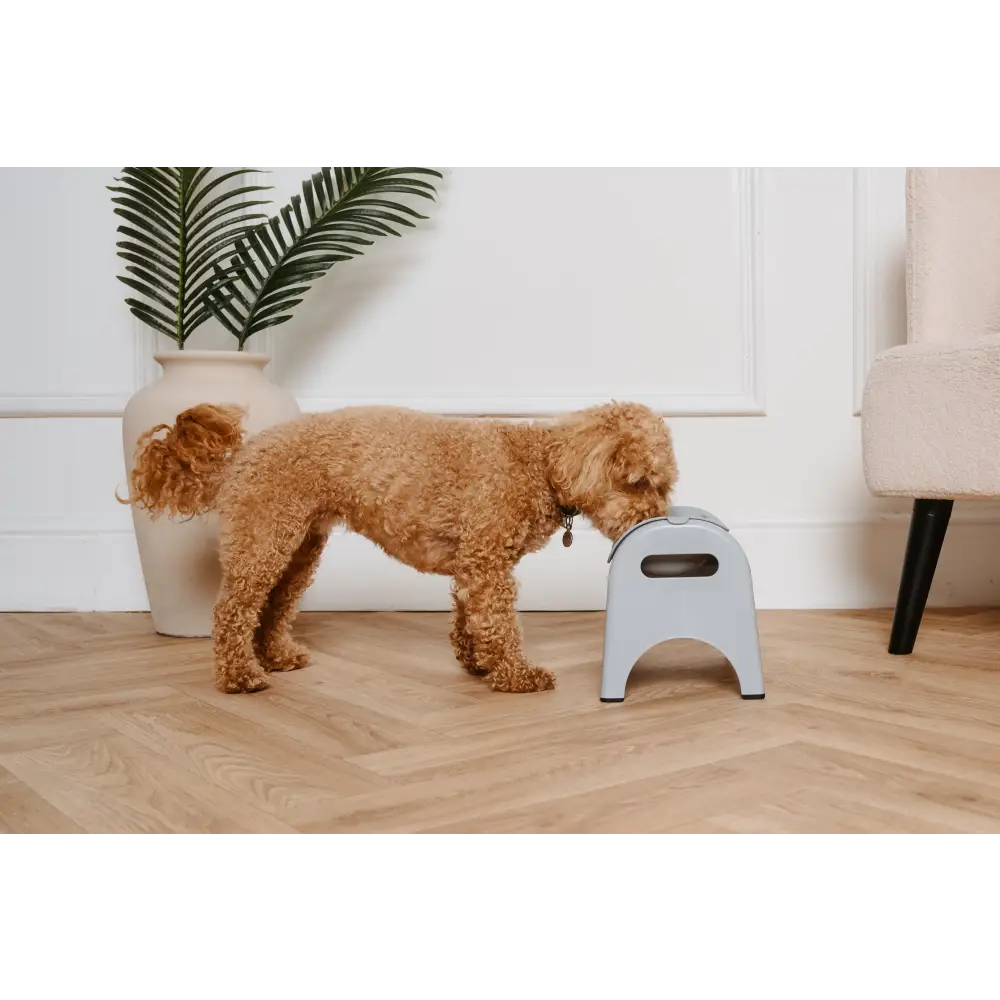
A slow feeder bowl is exactly what it sounds like: a bowl designed to physically prevent a dog from taking large bites rapidly. Instead of a flat or simple curved surface, slow feeders have ridges, mazes, raised sections, and obstacles that force dogs to work for each mouthful.
The mechanics are simple, but the effect is significant. A dog who typically finishes a meal in under 30 seconds will often take 3–5 minutes with a well-designed slow feeder. That's a 6–10x increase in meal duration from a single piece of kit.
The benefits go beyond just slowing down
Because dogs have to push their nose and tongue around the bowl to access food, slow feeders activate natural foraging behaviour. In the wild, finding food was a mentally demanding activity — sniffing, pawing, problem-solving. Modern domestic feeding removes all of that. A slow feeder gives a small piece of it back.
The result is that many owners notice their dogs are calmer and more settled after meals when using a slow feeder — not just physically, but mentally. They've done a little bit of satisfying work.
|
“A dog who finishes their meal in 30 seconds will often take 3–5 minutes with a good slow feeder — with less gas, less regurgitation, and visibly better settling afterwards.” |
|
FEATURED AT THE PETS LARDER EasyEat Slow Feeder Designed to extend mealtimes and reduce air ingestion. The maze-style surface activates natural foraging behaviour, making mealtimes mentally enriching as well as physically safer. Suitable for all breeds. |
What to look for in a slow feeder
-
A maze or obstacle design that's genuinely challenging — not just a single ridge
-
Food-safe, non-toxic materials with a stable, non-slip base
-
A size appropriate for your dog's snout — too tight becomes frustrating rather than enriching
-
Dishwasher safe (you will be cleaning this frequently)
|
🥩 Food Density vs Volume: The Nutrition Piece |
Here's something many owners don't consider: how much food you're feeding is as important as how fast it's eaten. A dog fed a low-nutrient-density food needs a larger physical volume to get adequate nutrition. More volume means more urgency, faster eating, and more air swallowed per meal.
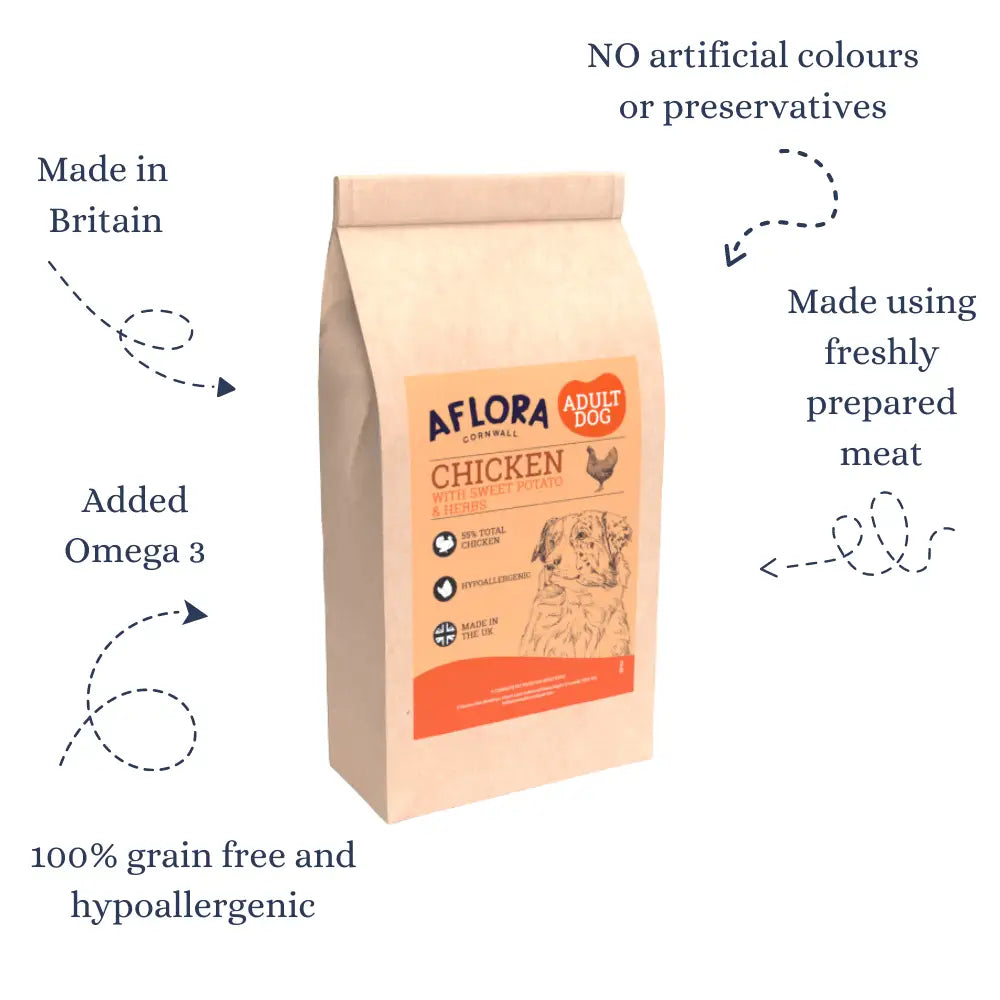
Switching to a nutrient-dense food — particularly cold-pressed dry food or a high-meat, grain-free formula — often reduces the portion size needed. This naturally extends mealtimes (less food to rush through) and, crucially, leaves dogs genuinely satisfied rather than still hungry ten minutes after the bowl is cleaned.
|
💡 NUTRITIONIST TIP Cold-pressed dog food is made at lower temperatures than standard kibble, which preserves more of the natural nutrients and enzymes in the ingredients. Because more of the nutrition is bioavailable, dogs typically need smaller portions — which can make a real difference to fast-eating habits. It also tends to be more easily digestible, reducing post-meal gas and discomfort. |
|
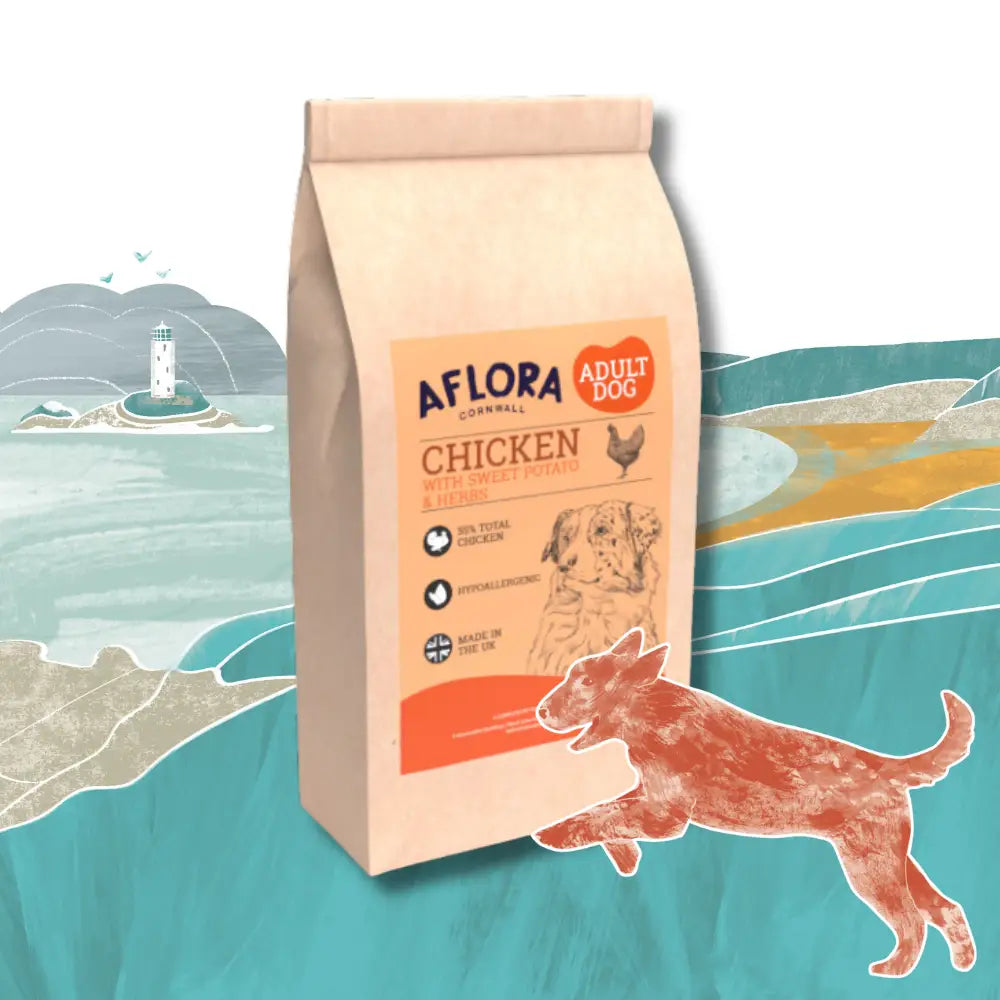
FEATURED AT THE PETS LARDER Cold Pressed Dog Food Collection High-meat, nutrient-dense formulas made at lower temperatures to preserve natural goodness. Smaller portions, better satiety, and easier digestion — a meaningful upgrade for fast-eating dogs. Featuring Eden Holistic and more. |
The combination of a slow feeder bowl and a nutrient-dense food addresses the problem from two angles simultaneously: slowing the physical act of eating, and ensuring the dog is genuinely satisfied by what they've eaten. Most owners who try both together notice a significant change within the first two weeks.
|
✅ Other Practical Solutions to Try Today |
Split meals into two sittings
If you're currently feeding one large meal per day, split it into two smaller meals. Less food at each sitting means less urgency, less air ingested per meal, and a lower volume of food sitting in the stomach at any one time. This alone can meaningfully reduce bloat risk in deep-chested breeds.
Scatter feeding
For dry food, scatter the meal across a snuffle mat, an area of grass, or a clean hard floor. Dogs have to sniff and forage for each piece of kibble individually. It takes 10 minutes, costs nothing, activates natural scent-hunting behaviour, and leaves dogs noticeably calmer and more settled afterwards.
Hand feeding
For dogs with a deeply ingrained fast-eating habit, spending one week hand-feeding their meals piece by piece helps break the physiological pattern and resets their relationship with eating. It requires patience, but it's one of the most effective behavioural resets available.
Raise the bowl — with caveats
Raised feeding stations are often recommended for large breeds. The evidence is mixed — some studies suggest raised bowls may slightly increase bloat risk in giant breeds — so if you have a very large breed, check with your vet before making this change. For medium dogs, a modest elevation is generally considered neutral to beneficial.
The priority order for most dogs:
-
Start with a slow feeder — the single highest-impact change for most dogs
-
Split into two daily meals — reduces volume and urgency at each sitting
-
Switch to a nutrient-dense food — smaller portions, better satiety
-
Add scatter feeding twice a week — enrichment and decompression combined
-
Allow 30 minutes rest after meals — avoid vigorous exercise immediately post-eating
|
❓ Frequently Asked Questions |
|
Q: Why does my dog eat so fast? |
|
It's an evolutionary hangover. Dogs descended from animals who competed for food in social groups — the fastest eater got the most. This instinct remains even in dogs who have never once faced competition for a meal. Rescue dogs and dogs from large litters often eat fastest of all, for understandable reasons. |
|
Q: Is it dangerous if my dog eats too fast? |
|
Yes, it can be. The most serious risk is gastric dilatation-volvulus (GDV or bloat) — a life-threatening condition where the stomach fills with gas and can twist on itself. It's most common in large, deep-chested breeds eating too quickly. Fast eating also causes regurgitation, excess gas, poor nutrient absorption, and persistent hunger due to bypassed satiety signals. |
|
Q: What should I do if my dog eats too fast? |
|
Start with a slow feeder bowl — it's the most effective single change and takes effect immediately. Combine this with splitting meals into two sittings and switching to a nutrient-dense food that requires a smaller portion. Scatter feeding and snuffle mats are excellent supplementary tools. |
|
Q: Do slow feeders actually work? |
|
Yes. A well-designed slow feeder extends a meal from under 30 seconds to 3–5 minutes or more. This dramatically reduces air ingestion, lowers bloat risk, improves digestion, and activates natural foraging behaviour. Most owners notice a visible difference in post-meal gas and settling within the first week of use. |
|
Q: What food is best for dogs who eat too fast? |
|
Nutrient-dense, high-meat foods that require smaller portion sizes are ideal. Cold pressed dog food is particularly well-suited — highly digestible, requiring smaller portions for the same nutrition, and producing less gas than standard extruded kibble. Pair with a slow feeder for best results. |
The Bottom Line
Fast eating in dogs is one of those problems that sits quietly until it doesn't. Most of the time it's just annoying — the empty bowl, the begging eyes, the spectacular post-dinner gas. But for some dogs, particularly larger breeds or those with a very extreme speed, it can tip into something genuinely dangerous.
The good news is that it's one of the more solvable problems in pet ownership. A slow feeder and a quality, nutrient-dense food will, for most dogs, transform mealtimes within a fortnight. You don't need a behaviour expert, medication, or a complicated protocol. You just need the right bowl and the right food.
Both are waiting for your dog at .
|
🐾 Ready to slow things down? Shop the EasyEat Slow Feeder and Cold Pressed Dog Food at The Pets Larder. thepetslarder.co.uk/products/easyeat-slow-feeder-5 · thepetslarder.co.uk/collections/cold-pressed-dog-food |


