


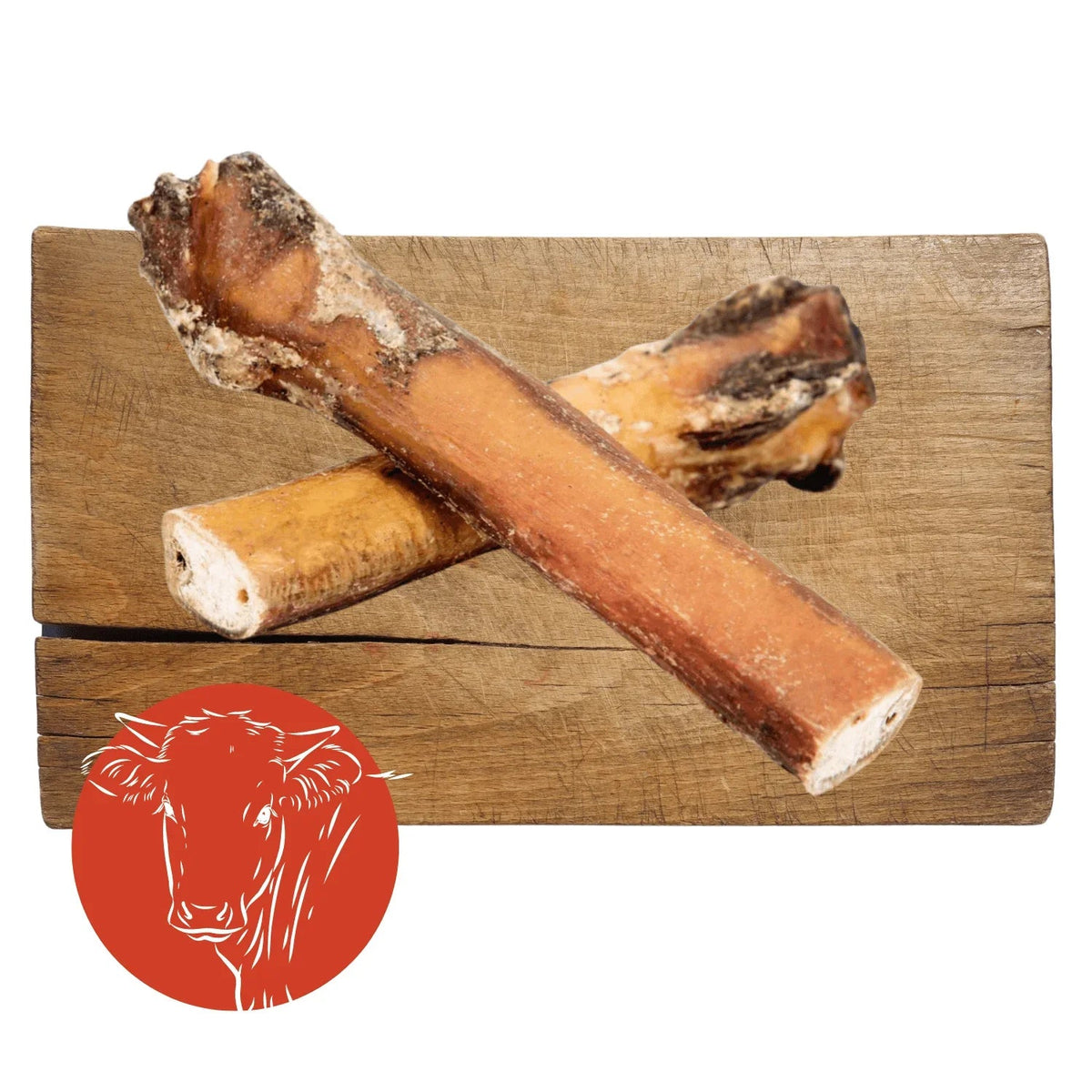
Bull pizzle is one of those products that suffers from its own name. People who ask what it is often do so with a mixture of curiosity and mild alarm. The answer is straightforward: a pizzle is the dried penis of a bull or steer. It is a single-ingredient, fully digestible, high-protein natural chew. Once that is established, the alarm usually dissipates — and the product makes considerably more sense than most of what lines conventional pet shop shelves.
Bully sticks — the more common commercial name — have become one of the most recommended natural chews in the UK market for good reason. They are genuinely long-lasting, genuinely digestible, and genuinely useful for a wide range of dogs. This post covers what a bull pizzle actually is, why it has become a standard recommendation among nutritionally-minded dog owners, what to look for on the label, and which dogs it suits best. For the context of why we recommend pizzle over rawhide, the rawhide explainer covers the full picture.
What a bull pizzle actually is and how it is made
A bull pizzle chew is made from the pizzle of a bull or steer — the penile muscle, which is composed almost entirely of dense protein tissue. Unlike muscle meat, which is relatively soft, penile tissue is dense and fibrous, which is why it dries into an extremely hard, durable chew that lasts far longer than most dried meat treats.
The production process for a quality pizzle chew involves cleaning, stretching (twisted and braided varieties require this step), and slow drying or baking at low temperature. A single-ingredient product — "bull pizzle, dried" — involves nothing else. No artificial preservatives are required because the low moisture content of the finished product creates an inhospitable environment for microbial growth. No flavouring additives are needed because the product is highly palatable to dogs in its natural state.
The British Twisted Pizzle — which we stock specifically — takes multiple strands and braids them before drying. This increases density and extends chew time, making it suitable for stronger chewers who would get through a straight stick quickly. The straight bull pizzle is appropriate for most dogs and is the most common format.
Why bull pizzle is a genuinely good chew
The case for bull pizzle as a natural chew rests on three properties: digestibility, nutritional profile, and chew duration.
Digestibility is the most important. A chew that fragments and is swallowed needs to be digestible — it needs to break down appropriately in the canine digestive system rather than accumulating as indigestible material or causing obstruction. Rawhide, which is the comparison point most owners have, is not reliably digestible and carries real obstruction risk. Bull pizzle, being pure protein tissue, digests in the same way as any other animal protein the dog eats. It does not swell in the digestive system. It does not create the obstruction risk that structural hide products do.
The nutritional profile is almost entirely protein — crude protein content typically sits between 75 and 85 percent in dried pizzle. For a dog that spends an extended session chewing, the nutritional input from that chewing is meaningful protein rather than empty carbohydrate or indigestible material.
Chew duration — the time a dog spends engaged with the product — is a genuine welfare consideration. A dog that chews for twenty minutes on a bully stick is doing something physiologically satisfying. The mechanical action of sustained chewing has calming effects mediated through endorphin release and jaw muscle engagement. Bully sticks, because of their density, provide duration that softer treats cannot match.
Which dogs are bully sticks best suited to?
Bull pizzle is appropriate for most adult dogs and many puppies, with some considerations by age, size, and health status.
For adult dogs of moderate to strong chew strength, a straight pizzle stick is appropriate as a regular chew. For very strong chewers — breeds like Rottweilers, Staffies, or any dog that destroys most chews quickly — the twisted or braided format extends engagement time meaningfully.
For puppies over twelve weeks, thin pizzle sticks are a good early natural chew introduction. They are soft enough that a puppy can manage them without dental risk, digestible enough that any swallowed fragments do not cause concern, and durable enough to satisfy the teething chewing drive for a meaningful session.
For senior dogs, the consideration is dental health. Very hard chews can crack compromised teeth — senior dogs whose dental condition has not been recently assessed should start with softer chews and work up to pizzle as appropriate. A useful guide: if you press your thumbnail firmly into the chew and leave no indentation, the chew is too hard for a dog with dental concerns.
For dogs with weight management requirements: bully sticks are relatively high in protein and moderate in fat. They are not a zero-calorie chew. Account for them in the daily intake — or opt for lower-fat alternatives like white fish treats or vegetable chews for dogs where calorie control is a priority.
For dogs with beef allergy: pizzle is a beef product and is not appropriate for dogs with a confirmed beef allergy. A fish skin chew or a single-protein alternative in a novel protein is the safer option.
What to look for on the label — and what to avoid
The label on a pizzle product should be short. "Bull pizzle, dried" or "beef pizzle, baked" is correct. If the ingredient list includes multiple items — particularly if it lists sodium, artificial flavourings, or unnamed preservatives — the product has been processed beyond what the ingredient requires.
Country of origin matters more in this category than it might appear. Pizzle from South American or Asian production operations carries different welfare and processing standards than UK or EU-sourced product. We stock British-sourced pizzle — the British Twisted Pizzle specifically — because the supply chain is shorter and the processing standards are verifiable. For any pizzle product, country of origin should be available on the label or on request.
Smell is worth mentioning because it is the aspect of bully sticks that owners find most variable. Some products are described as "odour-free" — this typically means the pizzle has been baked at higher temperature rather than slow-dried, which reduces the smell but also affects the nutritional profile and digestibility. A slow-dried pizzle has a stronger smell and a better nutritional outcome. The smell is real. Store them in an airtight container if it is a concern.
The bottom line on bully sticks
Bull pizzle is one of the most straightforwardly justifiable natural chews available. Single ingredient, fully digestible, high protein, long-lasting, appropriate for a wide range of dogs, and without the obstruction and processing concerns that make rawhide a product we do not stock.
The name is the biggest barrier to adoption. Once that is dispensed with, the product is difficult to argue against for a dog that needs sustained, digestible chewing. If you want to check whether it is the right choice for your specific dog — size, chew strength, age, dietary requirements — use the Chew Finder on the site. It takes two minutes and returns a specific recommendation based on your dog rather than a general category suggestion.