


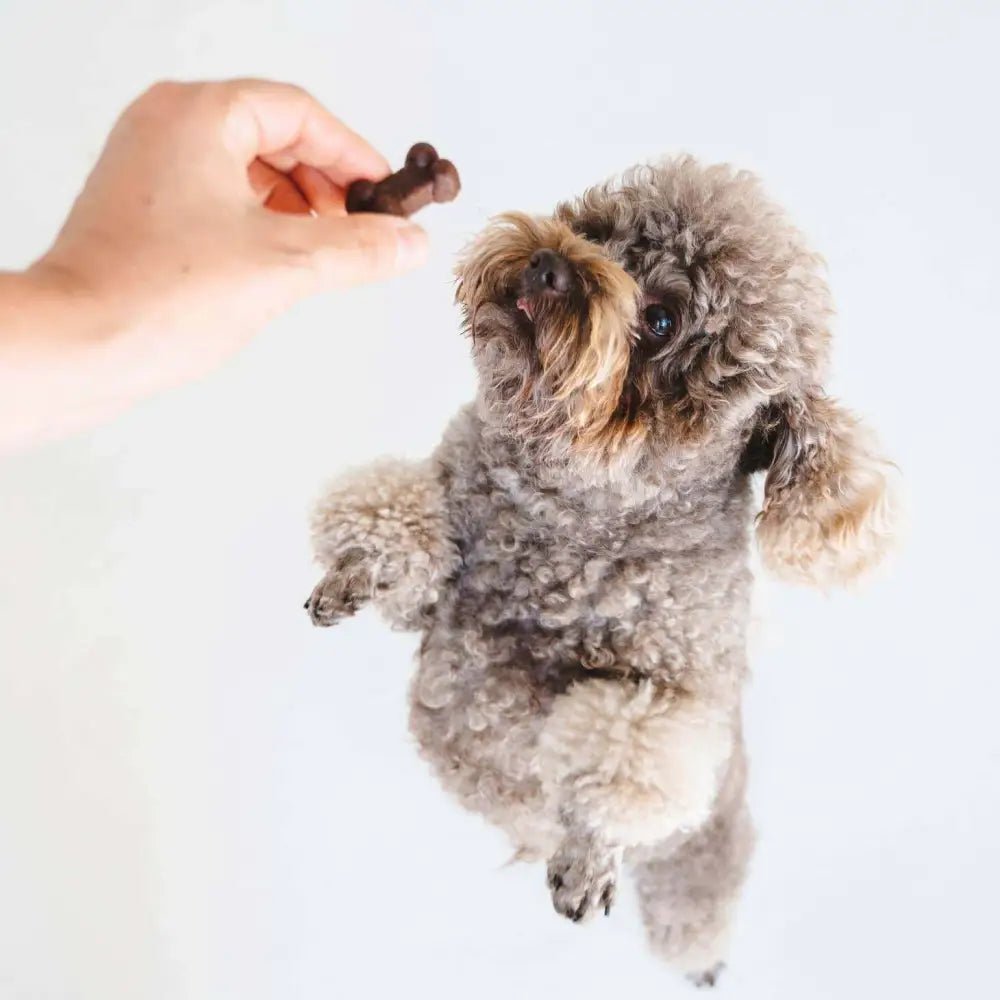
The treats aisle is where the gap between what the bag claims and what's actually in it is widest. "Natural" is a meaningless word in UK pet retail. "High in protein" tells you nothing about the protein. "Vet recommended" is mostly marketing. "Dental" is a label, not a clinical claim. And rawhide — still sold in supermarkets, still wrapped in cartoon dogs — is bleached cattle skin that the major US veterinary associations have linked to choking deaths and intestinal blockages for years.
The question you arrived with was probably "what are the best natural dog treats?" The better question is "which treats actually earn their place in my dog's day, and which ones are just a packet I keep refilling without thinking about it?"
What I'm bringing to this is twelve years of watching dogs and treats. Four years running Doggy Day Care Cornwall — a daycare that also offered boarding, which mattered, because it meant I watched owners come into the shop in the days before a stay and count out chews and biscuits like they were sending care parcels. A bedtime biscuit per night. Training treats for the morning walk. A No-Hide for the day they'd be away longest. Each one a small letter from owner to dog. Treats aren't snacks. They're the language of routine, training, and being responsibly off-lead in the woods. Get them right and the rest of your relationship with the dog gets easier. Get them wrong and you'll fight recall on every walk for the next ten years.
This is a real-world guide to the best natural dog treats in the UK for 2026 — the brands I stock, the ones I'd put in my own treat jar, and the principles for using them. If you're looking for a specific use case — low-fat treats for weight management or pancreatitis, hypoallergenic treats for sensitive stomachs, or rawhide alternatives — I've written separately on each and linked to them where they belong below.
At a Glance: The Brands We Recommend
Five brands I'd build a working treat layer from:
- JR Pet Products — single-ingredient pure-meat treats. The most consistent high-value reward I've watched at daycare. Training, recall, sensitive diets.
- Denzel's — soft, fast-breaking treats that suit puppies, seniors, and high-frequency training sessions.
- Gizzls — hypoallergenic novel-protein treats. For dogs on managed diets where the main meal shouldn't be undone by the treat layer.
- Earth Animal No-Hide — the rawhide alternative I'll actually stock. For the pub-garden, the boarding stay, the forty-minute occupation.
- Natural Cornish Dog Treats — our own range. Single-ingredient, air-dried, Cornish-sourced. What I give my own dogs.
If you want to understand why those brands and not others — the regulatory gap behind "natural" claims, why most dental treats don't do what they say, what high-value actually means, and how the right treat per moment changes what kind of dog you have on the lead — read on.
What "Natural" Actually Means in UK Pet Retail (Almost Nothing)
There is no legally enforced definition of "natural" in UK pet food regulation. A treat made of 30% chicken, 60% wheat flour, glycerin, sugar, and undeclared "natural flavourings" can legally call itself a natural dog treat. The Pet Food Manufacturers' Association has a voluntary code, but voluntary codes are voluntary. The front of the bag is marketing. The back of the bag, where the ingredient list lives, is where the truth is.
So when I say "natural" in this piece, I mean what it should mean — recognisable food, named single proteins, no glycerin, no smoke flavouring, no artificial colour, no "meat and animal derivatives" hiding under a vague phrase. If a treat looks like food and reads like food, it's a treat. If it looks like a food product, it's a food product.
That's the standard the brands below meet. It's not the standard most of the treats aisle meets.
The Anchor: Treats as Ritual, Not Snack
I'll say this once and not return to it sentimentally. Treats aren't snacks. They're the small punctuation marks of a working relationship with a dog.
The bedtime biscuit before saying goodnight is a routine, not a calorie. The training treat that finally gets a wobbly recall solid is the single most important piece of equipment you own for letting a dog off-lead safely. The chew that buys you forty minutes of peace while you take a call is enrichment — tired-in-the-jaw is settled-in-the-body. The treat in your coat pocket that marks a polite pass of another dog on the path is the reason that pass stayed polite the next time. The dogs at daycare whose owners had counted out a chew per evening before a boarding stay were calmer dogs. Continuity of routine across a change of place is how dogs cope with the change.
That's the position. From here on it's facts.
The Spectrum: Match the Treat to the Moment
The biggest mistake I watch owners make isn't buying the wrong brand. It's using the right brand at the wrong moment. Use a sustained chew as a training reward and you've lost the training session. Use a tiny training treat as a bedtime ritual and you've trained the dog that bedtime means nothing. The five moments worth distinguishing:
High-value training rewards
What they're for: recall practice, loose-lead walking past a distraction, vet visits, anything where you're competing with the environment for the dog's attention.
What they need to be: small enough to swallow without chewing (chewing breaks focus), high enough in scent and palatability to beat the smell of fox poo, soft enough to break into smaller pieces in a pocket. Pure meat, soft training treats, or fish-based rewards.
What they aren't: anything large, anything hard, anything the dog has to think about. A reward that takes thirty seconds to eat is a meal break, not a training treat.
Recall, in particular, is almost always a treat problem before it's a dog problem. The owners I've watched fix slipping recall at daycare have done it by upgrading the reward, not by adding more training. If a kibble-tier treat doesn't beat the environment, a pure-meat training coin usually does. JR's Pure Range and JR Pâté are what I reach for here. There are days when fox poo wins anyway — that's the price of an off-lead dog, and you accept it. But on the other 95% of days, the right reward is the difference.
Everyday rewards
The dozens of small moments per day where you want to mark something — a polite sit, a settle on the bed, a calm pass. Less about beating distraction, more about consistent reinforcement. Small, low-fuss, recognisable to the dog as "good thing." Pure-meat coins, small biscuits, single-ingredient cubes. This is also where the low-fat conversation lands — high-frequency rewards add up, and a 5-calorie treat × 30 reps × 7 days is a meaningful percentage of a small dog's intake. Right-size the treat and you can reward more freely.
Bedtime and ritual treats
The routines that close and open the day. The biscuit before bed. The treat after the morning walk. The Sunday-roast tidbit (a small piece of plain meat, not the gravy). Whatever fits the ritual. Often a slightly more substantial single biscuit or chew. The point isn't the value; the point is the consistency. Change the brand of high-value training reward as often as you like — change the bedtime biscuit rarely.
Sustained-chew treats
Enrichment, jaw exercise, the chew that lets you eat your own dinner. Single-ingredient where possible — pure beef, fish skins, root vegetables, properly engineered chews like Earth Animal No-Hide. Match the hardness to the dog. A heavy chewer needs different equipment from a gentle nibbler. Do not give bones cooked. Do not give rawhide.
Special-occasion and travel treats
Boarding stay, long car journey, difficult day at the vet. The only category where I'd actively tell you not to worry about the calorie maths. The point isn't nutrition. The point is comfort.
Most owners have one type of treat in the house and use it for at least three of these moments. That's the source of most "my dog isn't motivated" and "my dog ignores treats" complaints. They're not unmotivated. They're being asked to value a kibble biscuit at the same level as a piece of fresh chicken in a high-distraction environment, which they sensibly refuse.
What the Industry Hopes You Won't Notice
Four patterns worth being plain about. Each one is something the bag won't tell you.
"High in protein" is almost meaningless on a meat treat. Most quality meat treats are 50-70% protein by weight because they're literally made of meat. "70% protein" from "deboned salmon" is excellent. "70% protein" from "meat and animal derivatives" tells you nothing — that phrase can include feathers, beaks, hooves, and slaughterhouse waste, all legally. The figure on the front of the bag is less useful than the named source on the back. If the source isn't named, that's the answer.
"Dental" and "vet recommended" are barely regulated. A treat can describe itself as supporting dental health on essentially no evidence beyond "it's a chew." The chews that genuinely affect plaque do it through sustained time at the gumline (fifteen minutes plus of real chewing) and abrasive texture. Most marketed dental treats don't qualify. Many of the chews that genuinely work for dental aren't marketed as dental at all — they're just hard, single-ingredient, sustained-chew products like dried fish skins, beef tendons, or No-Hide chews. If a "dental chew" is gone in under thirty seconds, it's a biscuit with marketing on it.
Rawhide is bleached cattle skin. It is a leather-industry by-product, treated with sodium sulphide and lime to remove hair, then bleached with hydrogen peroxide, then often artificially flavoured and coloured to look appetising. It is associated with intestinal blockage, choking, and contamination. I won't stock it and I won't recommend it under any name — "beefhide," "beef skin," "pressed hide," any variant. Earth Animal No-Hide, which we stock, is named the way it is precisely to distinguish itself from this category. It's the rawhide alternative that actually digests. There's more detail in my dedicated piece on rawhide alternatives.
Hidden fat content is the quiet problem. Some treats marketed as "lean" or "high-protein" are quietly very high in fat. Liver-based products in particular run high. That's fine in moderation. It's a problem as a primary training reward for a dog that's already battling weight, or a serious problem for a dog with pancreatitis or a history of it. The fat percentage on the analytical constituents is the single most useful number on a treat bag. If you're managing weight, it should be under 10%. If you're managing pancreatitis recovery, it should be under 5%, and you should be talking to your vet. I've covered the specifics in my low-fat dog treats piece.
Who Actually Benefits from a Proper Treat Strategy
Most dogs benefit from a more intentional approach. The owners I've watched get the most out of treats fall into clear groups.
Owners working on recall or training
Almost every recall problem I've watched fix at daycare fixed with a treat upgrade. Kibble-tier to pure-meat-tier, rationed so the high-value reward stays high-value. If you find yourself thinking "my dog isn't food-motivated," try a piece of chicken or a JR Pâté cube. They are food-motivated. They've just rationally concluded that what you're offering isn't worth the work.
Owners with sensitive or allergic dogs
The hardest place to maintain a clean diet is the treat layer. Owners spend weeks getting the main meal right and then undo it with a handful of supermarket biscuits containing wheat, beef, and undeclared additives. Gizzls' novel-protein range, JR's single-protein Pure treats, and our own Natural Cornish range exist precisely so the treat layer can match a managed diet rather than fighting it. More detail on this in my piece on dog treats for sensitive stomachs.
Owners of dogs on weight management or pancreatitis recovery
This is where the low-fat conversation matters. Single-ingredient air-dried treats (white fish, lean meats) often come in under 5% fat and let you reward without adding meaningful calories. The wrong choice here isn't usually "too much treat" — it's "wrong type of treat for the dog's current condition."
Owners of senior dogs
Older dogs benefit from softer treats they can chew without strain, and from gentler rituals. A biscuit at consistent times of day is genuinely good for cognitive routine. Denzel's soft-baked range and JR Pâté work well here. The treat layer becomes more important as a dog ages, not less.
Owners of multi-dog households
What works for the bouncy young Labrador doesn't work for the older terrier with fewer teeth. One bag of one product never covers a multi-dog house, and the assumption that it should is what produces the half-finished bag piling up in the cupboard.
Owners who think their dog doesn't need treats
A minority position, and one I respect on principle. But applied to a working pet, it usually produces a less responsive dog whose owner attributes it to breed or temperament. Almost always it's the missing reward layer. A dog given a pure-meat coin in a structured training session isn't being indulged. They're being given the most efficient learning currency dogs have evolved to value. Refusing them that on principle is like refusing your child a textbook because you don't like teachers.
A Note on Reading the Bag
The single most useful diagnostic for a treat is the first five ingredients on the back of the bag. If the first ingredient is a named single protein ("deboned salmon," "fresh chicken," "Cornish whitefish") and the rest are recognisable, you're probably looking at an honest product. If the first ingredient is wheat, maize, sugar, glycerin, or "meat and animal derivatives," you're not.
This is the same principle I write about across our full guide to decoding pet food labels. The marketing on the front of the bag is paid for. The ingredient list on the back is the contract.
The Best Natural Dog Treats We Stock
JR Pet Products
Single-ingredient pure-meat treats. The high-value training reward I trust most.
JR is the brand that more dogs at daycare reliably respond to than any other. The Pure Range — beef, lamb, chicken, salmon, turkey, ostrich, rabbit — is 100% named single protein with nothing added. No grains, no sugar, no glycerin, no "natural flavourings." The Pâté bars are what owners on UK pet forums repeatedly cite as the gold standard for high-value training, and that matches what I see on the ground. Cut a JR Pâté bar into pea-sized cubes for a training pouch and you have a recall reward that will beat most distractions a dog will meet in a normal week. The Pure 100% meat sticks break down quickly without crumbling. The training coins are sized for high-frequency reward without overfeeding.
Key Benefits:
- Single named protein, no additives, no grains
- Made in the UK
- Multiple protein options including novel proteins (ostrich, rabbit, kangaroo) — useful for elimination diets
- Range covers training treats, pâté, sticks, and chews from one brand
- Soft enough to break into pocket-sized pieces
- Suitable for puppies, seniors, and dogs on managed diets
- The most consistent high-value reward response I've watched in twelve years
Best For: Recall training, puzzle feeders, everyday rewards, sensitive diets, any moment where the treat needs to actually compete with the environment.
One caveat: the Pure 100% meat treats are nutrient-dense and small dogs need very small portions. Easy to over-feed if you treat them like a biscuit rather than a reward.
We have a separate detailed guide to the JR range covering the full product line.
Denzel's
Soft, fast-breaking training treats for puppies, seniors, and high-frequency sessions.
Denzel's sit in a different category from JR — softer, more biscuit-like in texture but still made from recognisable ingredients and hand-baked in the UK in carbon-neutral ovens. The Springtime Bites range is where I start a puppy who isn't yet ready for the firmer pure-meat treats, or a senior dog whose teeth have started to go. They break down quickly in the mouth, which means a fast-paced training session doesn't get stuck while the dog chews. The flavours rotate through recognisable proteins and modest fruit-and-vegetable additions — not the "superfood-marketing-with-glycerin" pattern that some softer-treat brands run.
Key Benefits:
- Soft texture, gentle on younger and older teeth
- Recognisable ingredient lists, no artificial additives
- Hand-baked in the UK
- Carbon-neutral manufacturing
- Available in training-appropriate sizes
- Crumble into lick mats and puzzle feeders well
- Multiple flavour options for owners managing palate fatigue in fussy dogs
Best For: Puppies starting training, senior dogs with tooth wear, fast-paced training sessions where pure-meat treats are too slow to chew.
Gizzls
Hypoallergenic novel-protein treats for dogs on managed diets.
Gizzls earn their place specifically when the treat layer needs to match a sensitivity-managed main diet. Single novel proteins, no wheat, no maize, no dairy, no soya. If your dog is on a grain-free or limited-ingredient food because of skin, ear, or digestive issues, Gizzls means you can keep the treat layer clean rather than undoing the work of the diet with a handful of supermarket biscuits.
Key Benefits:
- Novel proteins, useful for dogs on elimination diets
- Hypoallergenic across the range
- No wheat, maize, dairy, or soya
- Natural ingredients only
- UK-made
- Range covers different sizes and proteins
- Slot directly into managed diets like grain-free or single-protein feeding
Best For: Dogs with confirmed sensitivities, dogs on vet-led elimination diets, owners managing skin or digestive conditions through diet.
One caveat: novel proteins only count as novel for dogs that haven't eaten them before. If your dog has had venison or duck previously, it's just an ingredient, not an elimination tool. Track what your dog has been exposed to before assuming a "novel" treat will work.
Earth Animal No-Hide
The rawhide alternative I'll actually stock. For the forty-minute occupation.
Earth Animal No-Hide is a deliberately engineered rawhide alternative — made from named meat sources (beef, chicken, salmon, venison) wrapped and pressed into a chew that delivers sustained jaw exercise without the digestive risk. Earth Animal cite 80% digestibility versus rawhide's 18%. I stock No-Hide because there's a real need for sustained-chew products and most of the alternatives are either rawhide (no), splintering bones (no), or chews that disappear in two minutes (pointless). No-Hide is the one I trust for the pub-garden, the boarding stay, the Sunday afternoon when you need the dog occupied.
Key Benefits:
- No rawhide, no bleach, no chemical processing
- Named meat sources, no animal by-products
- 80% digestibility (versus 18% for rawhide)
- Multiple sizes and proteins
- Sustained chew time genuinely delivers enrichment
- Made by an established US natural brand with a long UK presence
- Suitable for moderate to strong chewers
Best For: Sustained chewing, enrichment, the pub-garden moment, boarding stays, owners looking to replace rawhide.
One caveat: not for extreme power-chewers who will demolish anything in five minutes. Those dogs need supervision regardless of product, and probably a bigger size.
Natural Cornish Dog Treats
Our own range. Single-ingredient, air-dried, Cornish-made. What I give my own dogs.
We launched Natural Cornish Dog Treats — including our Whitefish Cubes — because there was a gap between the premium UK natural brands and the genuinely transparent, single-source, locally made treats I wanted for Flora. The range is deliberately small. Each treat is one named ingredient (whitefish, for example), air-dried, with nothing added. White fish in particular is under 2% fat, which makes it appropriate for weight-managed dogs and pancreatitis recovery as well as everyday training. The Whitefish Cubes are what I reach for when I want a clean, lean, single-source training reward that won't fight a sensitive dog's diet.
Key Benefits:
- Single named ingredient per product
- Cornish-sourced where possible
- Air-dried to preserve nutrients
- No additives, preservatives, or fillers
- Made in small batches
- Suitable for the most sensitive dogs and dogs on low-fat diets
- Whitefish Cubes are under 2% fat — among the lowest-fat treats in the shop
- Honest pricing — no margin compromise on quality
Best For: Strict elimination diets, weight-managed dogs, pancreatitis recovery, owners who value local sourcing, training rewards where transparency matters more than novelty.
What to Look For in a Quality Natural Dog Treat
- Named single ingredient first, ideally as the only ingredient. "Deboned salmon" or "Cornish whitefish" beats "fish" beats "fish derivatives."
- Recognisable ingredient list end-to-end. If you can't picture every ingredient as food, the treat probably isn't food.
- Appropriate size for the intended moment. Training treats should be pea-sized. Chews should last fifteen-plus minutes if they're claimed as dental.
- Matched to the main diet. Grain-free diet, grain-free treats. Single-protein diet, single-protein treats. The treat layer shouldn't undermine the meal.
- No glycerin, smoke flavouring, sugar, or artificial colour. None of these belong in food, dog or otherwise.
- Sensible fat percentage on the analytical constituents. Under 10% for general use, under 5% for weight management or pancreatitis recovery.
- No "meat and animal derivatives." The phrase is the answer.
The Treats I Approach with More Caution
I won't name specific brands — formulations change and naming names dates the piece. The patterns to be wary of stay the same:
Long ingredient lists. A treat with twelve ingredients, half of them unrecognisable, is a manufactured food product wearing a treat costume.
Smoke flavouring, glycerin, sugar, or artificial colour anywhere on the label. There is no nutritional reason for a dog treat to be smoked, sweet, or coloured red. These ingredients exist for the human shopper, not the dog.
"Natural" claims on otherwise low-quality products. The word is unregulated. The ingredients are the only honest test.
Wheat, maize, or cereal as a primary ingredient on a treat marketed as natural. It is the most common misleading pattern in the category.
Rawhide in any form. Including products that disguise rawhide as "beefhide" or "beef skin."
Dental-marketed chews the dog finishes in under thirty seconds. They are not doing what the bag says they're doing.
Vague meat references. "Meat and animal derivatives" can legally include parts of carcasses that don't have to be specified on the label. If the source isn't named, assume the worst.
Building a Working Treat Layer
The four-step approach for owners who want to think about this more intentionally.
Audit what you already have. Most owners find they have three bags of broadly similar everyday biscuits and nothing high-value for training. Or one type of bully stick and nothing soft for the puppy class. Empty the treat jar onto the table. What's actually there?
Decide your moments. Identify the four or five moments per week that matter. Recall practice. Bedtime. Visitor distraction. Sunday in the pub garden. Match a treat type to each.
Rotate, don't accumulate. The treat jar holds two or three rotating products. Use a bag, replace it with a different protein. Quality degrades, palatability drops, and dogs stop being excited about a treat they've been eating for six months. Continuity is for the bedtime ritual, not for the training pouch.
Upgrade when recall slips. When recall is becoming unreliable, this is the moment to upgrade — temporarily — to the highest-value treat you have. Fresh chicken, JR Pâté cubes, anything that beats the environment. Reliable recall is built on the dog learning that coming back is the most rewarding choice available. Once recall is solid again, you can ration back down.
The PFMA's general guideline is that treats shouldn't exceed 10% of daily calorie intake. The honest version of that rule is: if you're doing serious training, subtract from the day's food rather than adding the treats on top. A slightly smaller bowl on training days is the right adjustment. The dog gets the difference in treat form.
What I'm Confident About After Twelve Years
- Treats are not snacks. They're the language of routine, training, and bonding.
- The right treat for the moment matters more than the right brand.
- Recall is almost always a treat problem before it's a dog problem.
- Rawhide is a category I won't stock and won't recommend. The risk profile is real and the alternatives are good.
- "Natural" is meaningless without the ingredient list to back it up.
- Treats for sensitive dogs need to match the main diet, or the diet's work gets undone weekly.
- The treats I trust most are single-ingredient. The fewer the ingredients, the more I can stand behind it.
- Variety in the training pouch, continuity in the bedtime ritual.
- Most "my dog isn't food-motivated" complaints are actually "I'm offering the wrong treats."
What Good Homemade Treats Look Like
Not every reward needs to come out of a bag. Some of the best treats I've watched dogs respond to are owner-made: dehydrated liver, cubes of plain roast chicken from the Sunday roast (no gravy, no skin, no seasoning), sardines mashed onto a lick mat, small pieces of apple or carrot, a piece of dried tripe from a home dehydrator.
A good homemade treat looks like:
- A single recognisable food, not a recipe
- Appropriate portion size for the dog
- No added salt, sugar, onion, garlic, butter, or anything from the human seasoning shelf
- Stored properly — homemade dehydrated meat keeps for days, not weeks, without preservatives
- Used quickly
If you're feeding a quality main meal and rewarding with sensible homemade treats, you don't necessarily need anything commercial. The reason most owners benefit from a stocked treat layer is convenience and consistency, not nutritional necessity. The real distinction worth making isn't shop-bought versus homemade. It's intentional versus accidental. A handful of supermarket biscuits dispensed without thought does more harm than a dehydrated liver cube given with purpose.
What I'd Avoid
- Rawhide in any form, including products that disguise it as "beefhide" or "beef skin"
- Compound treats with twelve-plus ingredients, half of them unrecognisable
- Anything with smoke flavouring, glycerin, sugar coating, or artificial colour
- Treats marketed as dental that the dog finishes in under thirty seconds
- "Natural" treats whose first ingredient is wheat, maize, or unnamed cereal
- "Meat and animal derivatives" anywhere on the label
- Using the same single treat type for every moment of the day
- Underestimating how much the right high-value reward changes off-lead behaviour
Final Thoughts: The Best Natural Dog Treats 2026
If you want a treat layer that earns its place — that supports training, builds routine, manages sensitivity, respects your dog's diet, and doesn't undo your other work — the brands below are the ones I'd build it around.
✅ JR Pet Products — single-ingredient pure-meat treats, the high-value training reward ✅ Denzel's — soft, fast-breaking treats for puppies, seniors, and high-frequency sessions ✅ Gizzls — hypoallergenic novel-protein treats for managed diets ✅ Earth Animal No-Hide — the rawhide alternative that actually digests ✅ Natural Cornish Dog Treats — single-ingredient, air-dried, Cornish-sourced
The principle that ties them together: the right treat for the moment matters more than the right brand.
✅ Single named ingredients where possible ✅ Matched to your dog's diet, not undermining it ✅ Sized to the moment — pea-sized for training, sustained for chewing ✅ Free of glycerin, smoke flavouring, sugar, and artificial colour ✅ Rotated in the training pouch, consistent in the bedtime ritual
➡️ Browse our full natural dog treats range, the natural dog chews collection, or our training treats selection. For specific use cases, see our guides to low-fat treats, treats for sensitive stomachs, and rawhide alternatives.
Written by Katy Peck, founder of The Pets Larder. Katy founded Doggy Day Care Cornwall in 2014, building it from her back garden with three dogs to a peak capacity of 80 dogs daily across four years before opening The Pets Larder in 2018. She launched the Aflora range based on what she had observed in those years about canine nutrition, digestion, and what dogs actually thrive on. The Pets Larder won Independent Pet Shop of the Year (PetQuip & PIF) in 2021.