



Dog pate sits at the intersection of several categories. It is a treat, a training aid, a food topper, a medication disguiser, an appetite stimulator, and — if the formulation is good — a meaningful nutritional addition to a dog's diet. It is also one of the more variable products in the natural pet food market: the quality range between a single-ingredient, high-meat pate and a cereal-based block flavoured with meat extract is enormous, and the label is the only reliable guide to which end of that spectrum any given product occupies.
This post covers what makes a genuinely good dog pate, how to read the label, the practical applications that make pate one of the more useful products in the kitchen, and what JR Pet Products do particularly well in this category. For broader treat guidance, the best natural dog treats hub covers the full category.
What dog pate actually is
Pate, in the dog food context, is a smooth, spreadable or sliceable wet food made by blending meat or fish with a liquid base — typically water or broth — and sometimes a small quantity of binding or gelling agent. At its best it is a simple, high-meat product: named protein, water, and perhaps a small amount of seaweed or vegetable for nutritional completeness.
At its worst it is a processed block containing meat derivatives (unnamed, unspecified protein from unspecified species), cereals, artificial flavourings, and preservatives — with the texture of pate and the nutritional profile of a very poor wet food.
The distinction matters because the word "pate" carries no legal definition in UK pet food regulations. A product can be labelled pate regardless of its meat percentage, ingredient quality, or processing method. The label is the only information you have.
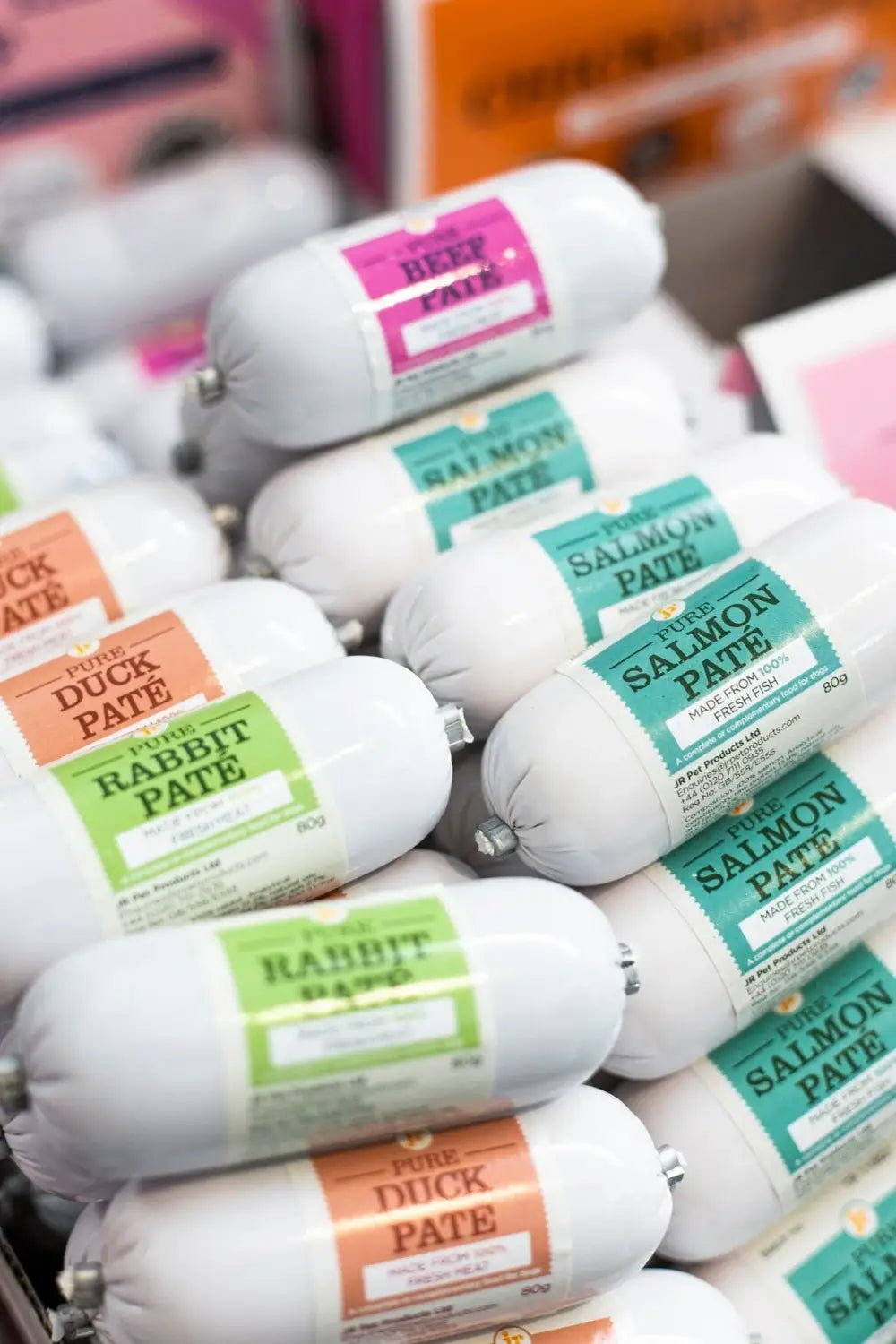
A good dog pate should state the species clearly — "chicken pate," "salmon pate" — with a declared meat or fish percentage. The higher that percentage, the more nutritionally useful the product. JR Pet Products Pure Pate states the ingredient clearly and the meat percentage prominently. That transparency is why it is our recommended product in this category.
How to use dog pate effectively
The versatility of a quality pate is one of its most useful properties. It does several jobs that no other format does as well.
As a training aid: pate can be presented on a lick mat, squeezed from a tube, spread on a silicone spoon, or used as a high-value reward for distance recall or complex training sequences where a single small treat would not be sufficiently motivating. The texture means it can be used without the dog breaking focus to chew — a quick lick and refocus, rather than a chew that takes the dog's attention away from the handler.
As a food topper: a small quantity of high-meat pate mixed through or spread on top of a dry kibble meal significantly increases palatability for fussy eaters. For dogs that eat dry food reluctantly, are going through a health episode that has suppressed appetite, or are making a dietary transition, a pate topper can be the difference between a dog eating its meal and leaving it. The moisture also increases the water content of a dry food meal, which is nutritionally beneficial.
As a medication disguiser: dogs that resist pills, tablets, or liquid medications reliably take them when wrapped in or dipped in a small amount of pate. The strong smell and flavour of a high-meat pate masks the medication better than cheese, bread, or similar human food options, and the smaller quantity required means less calorie impact for dogs on controlled diets.
As an appetite stimulator for recovering or senior dogs: dogs recovering from illness, dogs that have had anaesthetic, or very senior dogs with reduced appetite often respond to the strong smell of a quality pate when they will not touch their usual food. Warming it slightly enhances the aroma and improves uptake further.
What to look for on a pate label
Four things, in priority order.
Named protein species at the top of the ingredient list. "Chicken 65%" or "salmon, tuna" is what you want. "Meat and animal derivatives" at the top is a signal to look elsewhere.
Declared meat percentage. Any pate that does not tell you the meat or fish content is not giving you the information needed to evaluate it nutritionally. Percentages of 50 percent and above are where genuine nutritional contribution begins.
Short ingredient list. A high-quality pate does not require a long list of additives, thickeners, stabilisers, or flavourings to achieve palatability. The shorter the list, the more you know about what you are feeding.
Complete or complementary status on the label. A complete pate can be fed as the sole diet at appropriate quantities. A complementary pate cannot — it is designed to supplement rather than replace a complete food. Most training pates and smaller-format pates are complementary, which is appropriate given how they are used, but worth knowing if you are using pate as a significant proportion of the diet.
JR Pet Products Pure Pate — why we stock it
JR Pet Products is a UK brand that applies consistent ingredient standards across its range. The Pure Pate line is a single-protein, high-meat wet food in a format that works for all the applications described above: training, topping, medication administration, and appetite stimulation.
The ingredient list is short and transparent: named meat or fish, water, and a small mineral supplement. The meat percentage is declared and meaningful. The format — a sausage-shaped soft product that can be sliced, crumbled, or used whole — is practical across training and feeding applications.
We stock JR Pure Pate because it clears our ingredient bar and because it genuinely works for the applications owners most commonly need it for. It is one of the highest-clicked products on our site from organic search, which tells us owners are looking for it specifically — and the reason they look for it specifically is that it does the job.
The broader JR Pet Products range is worth exploring if you find the pate works well for your dog — the same ingredient standard applies across the JR range.
Pate and dietary management — a practical note
Pate used as a training aid or food topper contributes to the dog's daily calorie and nutrient intake. For dogs on calorie-controlled diets or dogs with specific health conditions, this needs to be accounted for.
For weight management: use pate in small quantities as a topper or training tool and reduce the main meal proportionally. A high-meat, low-carbohydrate pate contributes protein without significant carbohydrate loading — preferable to higher-carbohydrate treat options in a weight management context. The low fat dog treats post covers the full picture for calorie-conscious treat choices.
For dogs with kidney disease: the phosphorus content of high-meat pates is relevant if your vet has recommended phosphorus restriction. Check the declared mineral analysis or contact the manufacturer for phosphorus content before using high-meat pates as a regular addition for dogs with CKD.
For dogs with pancreatitis or fat sensitivity: some pates — particularly those made from duck or lamb — have higher fat content. Chicken or fish-based pates are generally leaner options for fat-sensitive dogs.
A quality pate used thoughtfully is one of the most practically useful products in a dog owner's kitchen. The key is knowing what is in it, which starts with a label that tells you. If you want to check whether a specific product would suit your dog's needs, use the Food Recommender or contact us directly.


