


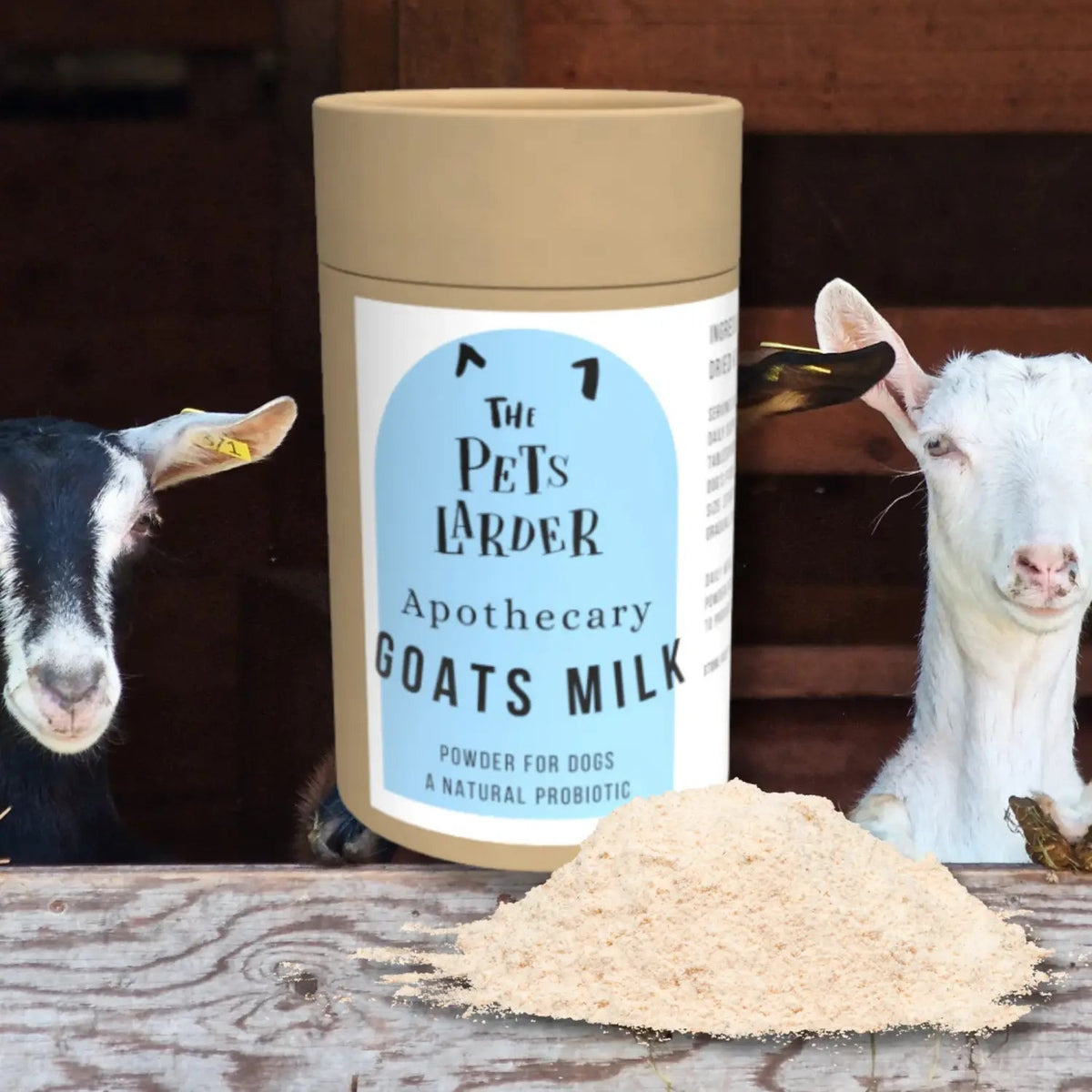
Goats milk has a longer history as a digestive aid in human nutrition than almost any other whole food. It has been used across cultures for centuries specifically because it is easier to digest than cow's milk — smaller fat globules, different protein structure, and naturally occurring enzymes that support digestion rather than requiring the digestive system to produce them. Those same properties apply to dogs, and with arguably more relevance, because dogs fed processed commercial food are working with digestive systems that were not designed for that input.
Goats milk for dogs is not a niche supplement recommendation. It has a straightforward nutritional rationale, a clean ingredient profile in its best forms, and a broad range of appropriate applications — from gut support after antibiotics to daily addition for dogs with chronic digestive sensitivity. This post covers what it actually does, which dogs benefit most, how to introduce it, and what to look for on the label. For a broader view of natural digestive supplements, the natural supplements guide covers the full Apothecary range.
What goats milk does for dogs nutritionally
Raw or minimally processed goats milk is one of the most bioavailable natural food sources available for dogs. That means the nutrients in it — protein, fat, calcium, phosphorus, B vitamins, vitamin A — are presented in a form the body can absorb and use efficiently, rather than requiring significant digestive processing before they become available.
The key nutritional contributions are three. First, naturally occurring enzymes: lipase, protease, and amylase are present in raw goats milk and support the digestion of fat, protein, and carbohydrate respectively. For dogs eating a processed diet where these enzymes are absent, goats milk provides meaningful digestive support. Second, probiotics: raw goats milk contains beneficial bacteria — Lactobacillus, Bifidobacterium, and others — that support the gut microbiome. Third, medium-chain fatty acids: the fat profile of goats milk differs from cow's milk in ways that support energy metabolism and have anti-inflammatory properties.
The protein in goats milk forms a softer curd than cow's milk, which is easier to digest. This matters particularly for dogs with sensitive stomachs or compromised gut function, where the reduced digestive burden of goats milk protein relative to other dairy is a practical benefit.
Goats milk also provides a meaningful source of bioavailable calcium and phosphorus — relevant for growing dogs, pregnant or lactating females, and senior dogs where mineral absorption may be reduced.
Which dogs benefit most from goats milk?
The broadest application is digestive support. Dogs with chronic loose stools, irregular digestion, or gut sensitivity that has not resolved through diet change alone often respond well to the probiotic and enzyme support in goats milk. It does not replace investigation of the underlying cause — persistent digestive issues warrant veterinary attention — but as a supportive addition it is one of the more evidence-aligned options in the supplement category.
Dogs recovering from antibiotic treatment are a specific group where goats milk is particularly useful. Antibiotics do not discriminate between pathogenic bacteria and beneficial gut flora. Post-antibiotic gut dysbiosis — the disruption of healthy microbial balance — is a common cause of digestive upset that persists after the infection being treated has resolved. Goats milk provides a direct source of beneficial bacteria to help restore balance, alongside the enzymatic support to normalise digestion.
Senior dogs often benefit from the enhanced bioavailability of goats milk nutrients. As dogs age, digestive efficiency declines — enzyme production decreases, gut transit changes, and nutrient absorption becomes less reliable. Goats milk addresses several of these changes simultaneously.
Puppies transitioning to solid food, dogs that are underweight or recovering from illness, and working dogs with high nutritional demands all have use cases for the additional bioavailable nutrition goats milk provides. It is also useful for fussy eaters — mixed with or poured over a meal it improves palatability significantly for dogs that eat reluctantly.
Dogs with confirmed dairy intolerance should approach with caution. Goats milk lactose is lower than cow's milk lactose, and many dogs that cannot tolerate cow's milk products handle goats milk without difficulty, but individual response varies. Start with a small amount and observe.
Powder versus fresh — what to know
Goats milk for dogs is available in fresh, frozen, and powdered forms. Each has practical trade-offs.
Fresh raw goats milk is nutritionally superior — the enzymes and probiotics are fully intact and the bioavailability is highest. The practical barriers are refrigeration, shelf life, and sourcing. Fresh goats milk needs to be used within a few days of opening and is not universally available.
Frozen goats milk retains most of the nutritional benefit of fresh and extends shelf life considerably. The freeze-thaw process affects some bacterial cultures but enzyme activity is largely preserved. A practical option for owners who can manage freezer storage.
Goats milk powder is the most practical format for most owners — ambient storage, long shelf life, easy to dose, and straightforward to rehydrate. The trade-off is that the drying process affects probiotic cultures. A quality goats milk powder that has been processed at low temperature retains enzyme activity and some microbial benefit, but it is not equivalent to raw fresh milk. For owners choosing powder, look for low-temperature processing and check whether probiotics are listed separately in the formulation — some powders add them back after processing.
How to introduce goats milk without digestive upset
The most common mistake with goats milk introduction is going too fast. Any new food, regardless of how gentle or beneficial, can cause loose stools in a dog whose digestive system is not accustomed to it. This is not a sign the product is wrong for the dog — it is a sign the introduction was too rapid.
Start with a teaspoon or a small quantity of rehydrated powder for a small dog, or a tablespoon for a larger dog. Introduce it alongside the existing food rather than as a replacement. After three to five days at this quantity with no digestive response, gradually increase to the intended maintenance amount over another week.
If loose stools occur at the starting amount, reduce further and increase more slowly. If they persist at the lowest practical dose, the dog may have genuine dairy sensitivity — at which point goats milk is not the right supplement regardless of the potential benefits.
Goats milk pairs well with other digestive supplements. Pumpkin powder — which we produce under the Pets Larder Apothecary range — provides soluble fibre that supports gut transit and prebiotic function, complementing the probiotic action of goats milk. Kaolin clay is useful for acute loose stools alongside goats milk for ongoing gut support. If you are building a digestive support protocol for a dog with chronic issues, the full picture is in the natural supplements guide.
What to look for on the label
Goats milk products for dogs range from genuine raw or minimally processed milk in useful forms to heavily processed products with goats milk as a minor ingredient in a longer formulation. The label is the guide.
For powder: the ingredient list should lead with goats milk. Processing method should be stated or available on request. If the powder contains added sugars, artificial flavourings, or a long list of additives, those are signals that the goats milk content is lower than the front of pack positioning implies.
For fresh or frozen: check the source. UK-produced goats milk from identified farms is preferable to unspecified international sourcing. Pasteurisation status affects the probiotic content — unpasteurised raw milk retains more beneficial bacteria but carries a higher hygiene requirement for handling and storage.
We stock goats milk powder as part of the Pets Larder Apothecary range. If you have a specific digestive challenge you are trying to address and want to know whether goats milk is the right tool for it, contact us directly or use the Food Recommender as a starting point.